
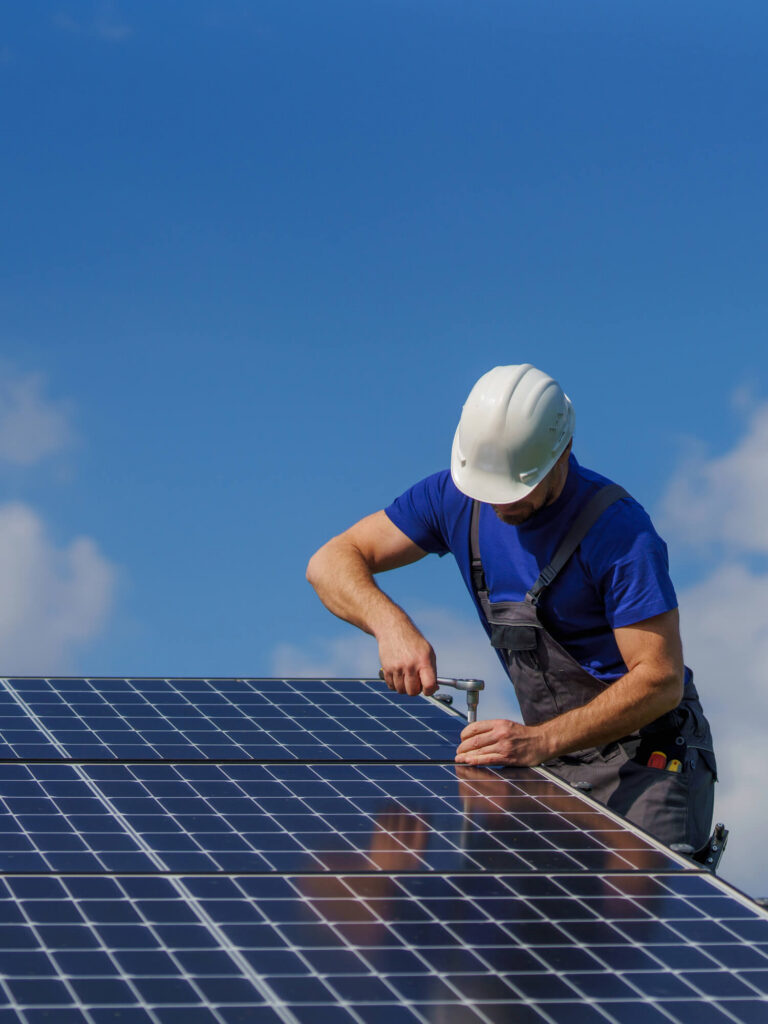
Rooftop solar lets homes and businesses make their own electricity and rely less on the grid. It also gives them a local energy source.
What Rooftop Solar Is
Rooftop solar uses solar panels on buildings to turn sunlight into electricity. This form of electricity generation makes direct current, or DC. An inverter changes it into alternating current, or AC, for lights, appliances, and other equipment.
A solar system may also include battery storage and a monitor. The amount of solar power made depends on roof direction, shade, panel quality, system size, and sunlight.
Solar panels can be fitted on homes, offices, warehouses, factories, schools, and other suitable buildings. That turns roof space into a place for local energy generation without using more land.
Why Rooftop Solar Is Growing Across the UK
Rooftop solar is now a clear part of the UK’s renewable energy mix. Government data released in August 2026 said there were nearly 172,000 solar installations in the UK since the start of the year. More than seven in ten July installs were on roofs.
The same data said 2025 was a record year for solar rollout, with 269,000 installs. Around 255,000 were rooftop systems on homes, businesses, and other buildings.
The UK Solar Roadmap also points to rooftops as a key place for future power capacity. It sets a goal of 45–47 GW of solar capacity by 2030 and leaves room for more home and business roofs.
This growth means more buildings are becoming small generators of clean energy. It also means there is a greater need to plan for the full life of solar equipment.
Why Homes Use Rooftop Solar
For households, rooftop solar makes it possible to generate electricity where it is used. Using solar power in the day can cut the amount bought from the grid and may lower bills.
Savings depend on system size, power use, install cost, electricity prices, and how much power is used on site.
Homeowners may also add battery storage. Extra electricity made in the day can be saved and used later when solar output is lower. That lets homes use more of their own renewable energy.
Before installing solar panels, people should look at roof condition, free space, shade, expected power use, and install cost.
Why Businesses Use Rooftop Solar Panels
Businesses often use a lot of electricity during the day, so they can gain a lot from rooftop solar. Offices, warehouses, factories, farms, and shops can use solar power while they are open.
A business solar system can help a company make part of its own electricity instead of buying all of it from the grid. Savings depend on system size, energy demand, electricity prices, install cost, and how much power is used on site.
Large roofs can give plenty of room for solar panels without changing how the building is used. Warehouses and industrial sites, for example, may have wide roof areas that suit a rooftop solar setup.
Before installing rooftop solar, businesses should check roof condition, strength, energy use, grid link needs, and building plans.
Battery Storage Can Help Use Solar Power Better
Solar panels make electricity when the sun is out, but electricity demand does not always match that output. Battery storage helps close that gap.
A business may make more solar power at midday than it can use right away. A battery can store some of that power for later, when demand rises or solar output falls.
The same idea works for homes. Power made in the day can be saved and used in the evening, so households can make better use of their own renewable sources.
Battery storage is now an important part of modern energy systems. Even so, batteries add to the total cost of solar systems and should be weighed against each user’s needs.
Rooftop Solar and the Renewable Energy Shift
Rooftop solar is part of a wider move toward local energy generation. Instead of power coming only from large power plants, more buildings can make electricity near where it is used.
This shift supports the growth of renewable energy and makes use of roofs that are already there. Solar and wind are key renewable sources, and rooftop solar helps widen that mix. In global energy planning, solar panels and wind turbines are now central tools for clean energy. In the United States and other markets, the same trend is also helping energy generation move closer to demand.
The UK Solar Roadmap also names homes and business roofs as key places for more solar rollout.
For homes and businesses, solar power can also work with other energy technologies. Battery storage, smart controls, efficient equipment, and other low-carbon tools can make energy systems more flexible.
The value of rooftop solar goes beyond putting up panels. Good planning can help buildings use the power well and keep energy costs under control.
What Happens When Rooftop Solar Panels Reach End of Life?
Solar panels last a long time, but they will one day need repair, replacement, or recycling. As more rooftop solar systems are installed, good end-of-life care will matter more.
Solar panels contain materials that can be recovered through proper recycling. Glass is a large part of a typical panel, while aluminium frames and other metals can also be reused.
Recycling solar panels can cut waste and help recover useful materials. It also supports a circular economy by keeping materials in use instead of sending old equipment to waste.
Businesses that install larger solar systems can also plan for end of life at the start of the project. That can make later replacement and recycling easier to handle.
The Future of Rooftop Solar
Rooftop solar is changing how homes and businesses make and use electricity. Households can produce solar power close to home, while businesses can use large roofs to meet daytime electricity demand.
As the market grows, the focus will likely move beyond the simple choice to install solar panels. Battery storage, smart energy use, efficient buildings, and careful recycling will all play a part in the future of rooftop energy systems.
As electric vehicles and other new loads add to demand growth, local solar power can help ease pressure on the grid. This makes rooftop solar even more useful in a wider energy mix.
The growth of rooftop solar also makes life-cycle planning more important. A responsible approach looks at the system from install to use, care, and final recycling.
For homes and businesses, this creates a way to use existing buildings as useful energy assets while supporting the wider move away from fossil fuels and toward clean energy and renewable sources.