
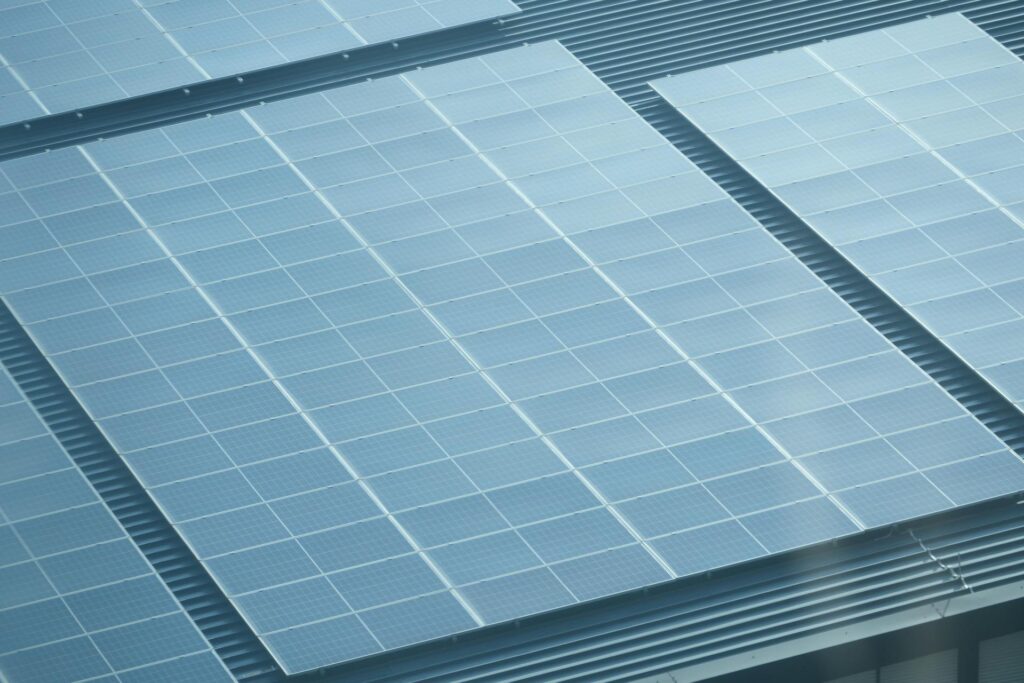
Yes, solar panels can be recycled, and in the UK, recycling them is not just the responsible choice, it is a legal requirement for businesses.
Solar panels are classified as Waste Electrical and Electronic Equipment (WEEE) under UK law. This means that when panels reach the end of their operational life, businesses and organisations are obligated to ensure they are processed through a licensed and compliant recycling facility; not sent to landfill or disposed of through general commercial waste.
The good news is that modern solar panels are highly recyclable. Depending on the panel type, up to 95% of the materials in a standard silicon-based solar panel can be recovered and reintroduced into the supply chain. That makes solar energy one of the most sustainable technologies available, not just in how it generates power, but in how it can be managed responsibly at end of life.
What Makes Solar Panels Recyclable?
To understand why solar panels can be recycled so effectively, it helps to know what they are made of.
A standard crystalline silicon solar panel contains several distinct material layers, most of which have established recycling pathways:
Aluminium frame: The outer frame accounts for a significant proportion of the panel’s weight and is one of the simplest components to recycle. Aluminium can be melted down and recast with very little loss of quality, making it one of the most recyclable materials in the panel.
Glass: Toughened glass makes up approximately 75% of the total weight of a solar panel. It can be separated, cleaned, and repurposed for use in construction materials, insulation, or new panels. Glass recovery is one of the most efficient stages of the recycling process.
Silicon cells: The photovoltaic cells at the heart of the panel convert sunlight into electricity. Silicon wafers recovered during recycling can be purified and reused in new photovoltaic cells or in other electronics manufacturing.
Copper and silver: These metals are present in relatively small quantities but are valuable enough to make recovery worthwhile. Silver in particular is used in the conductive elements of solar cells, and extracting it during recycling reduces demand for newly mined material.
Plastic and polymer layers: The backsheet and encapsulant layers are the most challenging components to recycle, but they can be separated and repurposed in industrial processes.
Together, these materials mean that very little of a solar panel needs to go to waste, provided it is processed by a specialist recycling facility.
How Are Solar Panels Recycled?
The recycling process for solar panels involves several stages, each designed to separate and recover specific materials efficiently.
1. Collection and Transport
The process begins with collection. A licensed recycler collects the panels from your site, providing the necessary duty of care documentation, including a consignment note, to ensure your business remains compliant with WEEE regulations throughout the process.
2. Dismantling and Frame Removal
On arrival at the recycling facility, the aluminium frame and junction box are removed. These components can usually be sent directly for recycling without further processing and represent a straightforward recovery stream.
3. Glass Separation
The glass layer is then carefully separated from the panel body. Specialist mechanical equipment is used to ensure the glass is recovered intact and free from contamination, maximising its value for reuse.
4. Mechanical Processing
The remaining panel material such as silicon cells, backsheet, and encapsulant is processed mechanically to break it down and separate the different material streams. At PV Recycling, the recycling process is carried out in-house using our own mechanical recycling equipment, rather than being sent to a third party.
5. Material Recovery and Documentation
Recovered materials including silicon, copper, and silver are separated and prepared for re-entry into UK supply chains. Once the process is complete, your business receives a certificate of destruction and full duty of care documentation confirming compliant disposal.
Are All Types of Solar Panels Recyclable?
Yes, the two main types of solar panel in use across the UK can both be recycled, though the processes differ slightly.
Crystalline silicon panels (monocrystalline and polycrystalline) are the most common type in use across commercial and industrial installations. They have well-established recycling processes and high material recovery rates.
Thin-film panels, which include cadmium telluride (CdTe) and copper indium gallium selenide (CIGS) variants, require different handling due to the materials involved, some of which are classified as hazardous. Specialist recycling processes exist for these panel types, and they must be handled by a facility with the appropriate licensing and expertise.
At PV Recycling, we collect and process both types.
What Are the Legal Requirements for Solar Panel Recycling in the UK?
Under the Waste Electrical and Electronic Equipment (WEEE) Directive, which is retained in UK law post-Brexit, solar panels are classified as Category 4 large equipment. This classification places a legal obligation on businesses to ensure panels are:
- Collected by a licensed waste carrier
- Processed at an approved treatment facility
- Covered by proper duty of care documentation throughout
Failure to comply with WEEE regulations can result in enforcement action and financial penalties. Businesses should also be aware that simply handing panels over to an unverified third party does not discharge your legal duty of care, you remain responsible for ensuring the panels are processed compliantly.
At PV Recycling, every collection is accompanied by a full audit trail, digital consignment notes, and a certificate of destruction, giving your business complete documentation for compliance purposes.
When Do Solar Panels Need to Be Recycled?
Solar panels have a typical operational lifespan of 25 to 30 years. Most commercial and industrial installations in the UK were installed during the solar boom of 2010 to 2015, meaning a significant volume of end-of-life panels will be entering the waste stream throughout the late 2020s and into the 2030s.
There are several scenarios in which businesses may need to arrange solar panel recycling before the end of a panel’s natural lifespan:
- Decommissioning a solar farm or ground-mounted array
- Replacing panels as part of a system upgrade or efficiency improvement programme
- Clearing panels following structural damage or insurance claims
- Demolition or redevelopment of a site with a rooftop installation
- Handling manufacturer or installer returns and warranty replacements.
In all of these cases, recycling is the correct and legally compliant route.
Recycle Solar Panels With PV Recycling
At PV Recycling, we provide a fully WEEE-compliant solar panel collection and recycling service for businesses across the UK. Whether you are decommissioning a large solar farm, replacing panels as part of a system upgrade, or managing ongoing waste from an installation programme, we can provide a tailored solution.
We collect crystalline silicon and thin-film panels of all makes and models, along with solar inverters and battery storage systems.
Get in touch today to discuss your requirements and receive a competitive quote.